Search This Blog

Showing posts with label Japan. Show all posts

Thursday, June 16, 2011

Top 10 Most Powerful Countries In The World


A number of surveys have said that the following countries are the most powerful today:

1. The United States of America

This country is the largest economy today and has the strongest army as well as a very powerful democracy. It is also said to be a superpower and its media is very influential as well. It has built itself and its power ever since it gained independence and is only getting more powerful. The country controls international relations and is a part of a number of influential bodies.

2. Russian Federation

The Russian Federation has the second most powerful army and controls a number of states in the Central Asian area. It has a very large population and immense world area. These factors allow it to stay independent and prevent external forces from meddling in the political, economic and financial issues of the country. Because of its size, Russia has the resources to become a superpower.

3. Peoples Republic of China

Peoples Republic of China is said to have the 4th largest GNP in the world. It has gained supremacy only recently over Britain and France. It has a large army and immense potential to become the most powerful country in the world.

4. France
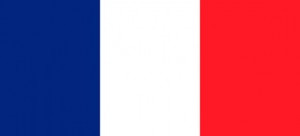
France is a part of the UN Security Council and is said to be the fifth most powerful country in the world. It is a great nuclear power and influences many African nations. The French have a large army which helps in maintaining law and order. It is a G7 economy and part of the European Union.

5. Britain

Britain is part of the UN Security Council as well. It has powerful nuclear weapons and the democracy is considered to be the most stable as well. As a G7 economy and as a leading country in areas like music, films and media, the country has immense influence when it comes to world politics. It is a part of the European Union as well

6. Japan

Japan has an extremely large economy and is a leading democratic power. The population of the country is large but since the competition is intense, it features below USA, China, France and Britain.

7. India

India is very populous and has a well-known democracy which gains its power from the detailed Constitution of India. The economy is growing at a staggering rate and the nuclear weapons are becoming more and more powerful.

8. Germany

Germany has the third largest economy in the world and features in the list of the most powerful European Union members. However, it was greatly affected during the two World Wars which hampered its influence over the world.

9. Pakistan

Pakistan has a very large Muslim population and powerful nuclear weapons. It is a united country but since it spends a hefty sum on military dictatorship, it has not become truly powerful. In addition to that, even though it has good resources, the battles with India have made the country very weak in these terms as well. Therefore, if it can replenish these resources and find a way to balance its political standing, it will be able to become more powerful.

10. Brazil

The Republic of Brazil is very large and is part of Latin America. It is said to hold the largest Portuguese speaking population in the world. In addition to that, the media of the country is quite stable and its relations with the rest of the world are quite secure.

Saturday, March 6, 2010

Capsule Hotel - Japan

A capsule hotel is a type of hotel in Japan with a large number of extremely small "rooms" (capsules).

The guest space is reduced in size to a modular plastic or fiberglass block roughly 2 m by 1 m by 1.25 m, providing room to sleep. Facilities range in entertainment offerings (most include a television, an electronic console, and wireless internet connection). These capsules are stacked side by side and two units top to bottom, with steps providing access to the second level rooms. Luggage is stored in a locker, usually somewhere outside of the hotel. Privacy is ensured by a curtain or a fibreglass door at the open end of the capsule. Washrooms are communal and most hotels include restaurants (or at least vending machines), pools, and other entertainment facilities.

This style of hotel accommodation was developed in Japan and has not gained popularity outside of the country, although Western variants with larger accommodations and often private baths are being developed. Guests are asked not to smoke or eat in the capsules.

These capsule hotels vary widely in size, some having only fifty or so capsules and others over 700. Many are used primarily by men[2]. There are also capsule hotels with separate male and female sleeping quarters. Clothes and shoes are sometimes exchanged for a yukata and slippers on entry. A towel may also be provided. The benefit of these hotels is convenience and price, usually around ¥2000-4000 a night ($21-42, €16-31, £15-29).

Click here to enlarge image

Click here to enlarge image

Click here to enlarge image

Click here to enlarge image

Click here to enlarge image
Each capsule has a little control panel.

Click here to enlarge image
There is an alarm clock, TV/Radio speaker, light and TV on/off switch, volume knob, and some panic button. TV channels can also be changed through control panel.

Click here to enlarge image
TV and Pay box. Pay box is for premium channels.

Click here to enlarge image
A small screen or blinder that indicate outsiders not to disturb you.

Click here to enlarge image
Occupants are asked not to eat and smoke inside the capsule.

Click here to enlarge image
There are separate capsule sections for male and female occupants ensuring safety and better security .

Sunday, February 21, 2010

Shiba Sakura of Hokkaido [Japan]


Hokkaido is Japan's second largest island after Honshu, accounting for about 20% of the country's land area, but only 4,5% of its population (5,7 million inhabitants). The name "Hokkaido" means "Way to the North Sea", and was given to the island after the Meiji restoration. Before that, it was called Ezo, and was mostly populated by the indigenous Ainu.


Hokkaido has a special status in Japan, both politically (it is not an ordinary prefecture), and in the heart of the Japanese. It is seen as a place a vast wilderness, where winter are bitterer than anywhere else in the country (often dropping below -20°C degrees).


Because it only officially became part of Japan in 1868, has little history, place names unheard of anywhere else (often adaptations from Ainu names), Japanese sometimes feel that Hokkaido is not really Japan, although it belongs to it. Even food is different. Here, people eat lamb (a popular dish is called "Genghis Khan"), which most other Japanese never do. Hokkaido has however become indispensable to the Japanese economy and even culture. Most of Japan's milk and dairy products come from Hokkaido. Japan's first beer brewery (Sapporo) is also from Hokkaido, and is still one of the country's most popular.


The seasons play an important role in Hokkaido's tourism industry. Winter welcomes skiers and the Snow Festival (see Sapporo), Spring and Summer are reputed for their beautiful fields of colourful flowers so particular to Hokkaido, and Autumn for its crimson and gold landscapes.


Click here to enlarge image

Click here to enlarge image

Click here to enlarge image

Click here to enlarge image

Click here to enlarge image

Click here to enlarge image

Click here to enlarge image

Click here to enlarge image

Wednesday, December 16, 2009

Bonsai Art


Bonsai is the art of aesthetic miniaturization of trees, or of developing woody or semi-woody plants shaped as trees, by growing them in containers. Cultivation includes techniques for shaping, watering, and repotting in various styles of containers. This process is also known as dwarfing.

The word bonsai is used in the West as an umbrella term for all miniature trees in containers or pots.

Click here to enlarge image

Click here to enlarge image

Click here to enlarge image

Click here to enlarge image

Click here to enlarge image

Click here to enlarge image

Click here to enlarge image

Click here to enlarge image

Click here to enlarge image

Click here to enlarge image

Friday, December 11, 2009

Unknown creature found in Russia

This unknown creature was found by Russian soldiers on Sakhalin shoreline. Sakhalin area is situated near to Japan, it’s the most eastern part of Russia, almost 5000 miles to East from Moscow (Russia is huge). People don’t know who is it. According to the bones and teeth – it is not a fish. According to its skeleton – it’s not a crocodile or alligator. It has a skin with hair or fur. It has been said that it was taken by Russian special services for in-depth studies, and we are lucky that people who encountered it first made those photos before it was brought away.

Click here to enlarge image

Click here to enlarge image

Click here to enlarge image

Click here to enlarge image

Click here to enlarge image

Click here to enlarge image

Saturday, December 5, 2009

JAPAN - The Land of Rising Sun


JAPAN is an island country in East Asia. Located in the Pacific Ocean, it lies to the east of the Sea of Japan, People's Republic of China, North Korea, South Korea and Russia, stretching from the Sea of Okhotsk in the north to the East China Sea and Taiwan in the south. The characters which make up Japan's name mean "sun-origin", which is why Japan is sometimes identified as the "Land of the Rising Sun".

Japan is an archipelago of 6,852 islands. The four largest islands are Honshū, Hokkaidō, Kyūshū and Shikoku, together accounting for 97% of Japan's land area. Most of the islands are mountainous, many volcanic; for example, Japan’s highest peak, Mount Fuji, is a volcano. Japan has the world's tenth-largest population, with about 128 million people. The Greater Tokyo Area, which includes the de facto capital city of Tokyo and several surrounding prefectures, is the largest metropolitan area in the world, with over 30 million residents.


Archaeological research indicates that people were living on the islands of Japan as early as the Upper Paleolithic period (40,000 to 10,000 years ago).


Japan is a major economic power and has the world's second-largest economy. It has maintained a unitary constitutional monarchy with an emperor and an elected parliament called "the Diet".


Click here to enlarge image
Cherry Blossoms at Ninna Ji Temple Grounds, Kyoto

Click here to enlarge image
Castle Hirosaki, Kyoto

Click here to enlarge image
Tokyo city at dusk

Click here to enlarge image
Bullet Train in Ginza District, Tokyo

Click here to enlarge image
Bamboo Forest at Arashiyama Park, Kyoto

Click here to enlarge image
Kinkakuji Temple, Kyoto

Click here to enlarge image
Grand Gate, Itsukushima Shrine, Miyajima

Click here to enlarge image
Garden Staircase, Kyoto

Click here to enlarge image
Eitai Bridge, Tokyo

Click here to enlarge image
East Shinjuku, Tokyo

Click here to enlarge image
The Sacred Bridge, Daiya River, Nikko

Click here to enlarge image
Shinjuku District, Tokyo

Click here to enlarge image
Seiryuen Garden, Nijo Castle

Click here to enlarge image
Mount Fuji

Click here to enlarge image
Kintai Bridge, Yamaguchi Prefecture

Click here to enlarge image
Tokyo city at night

Click here to enlarge image
Zao National Park, Yamagata Prefecture